End-of-line sampling
Compliance / Quality Verification Presence
Put consistent visual judgement at every critical production step.
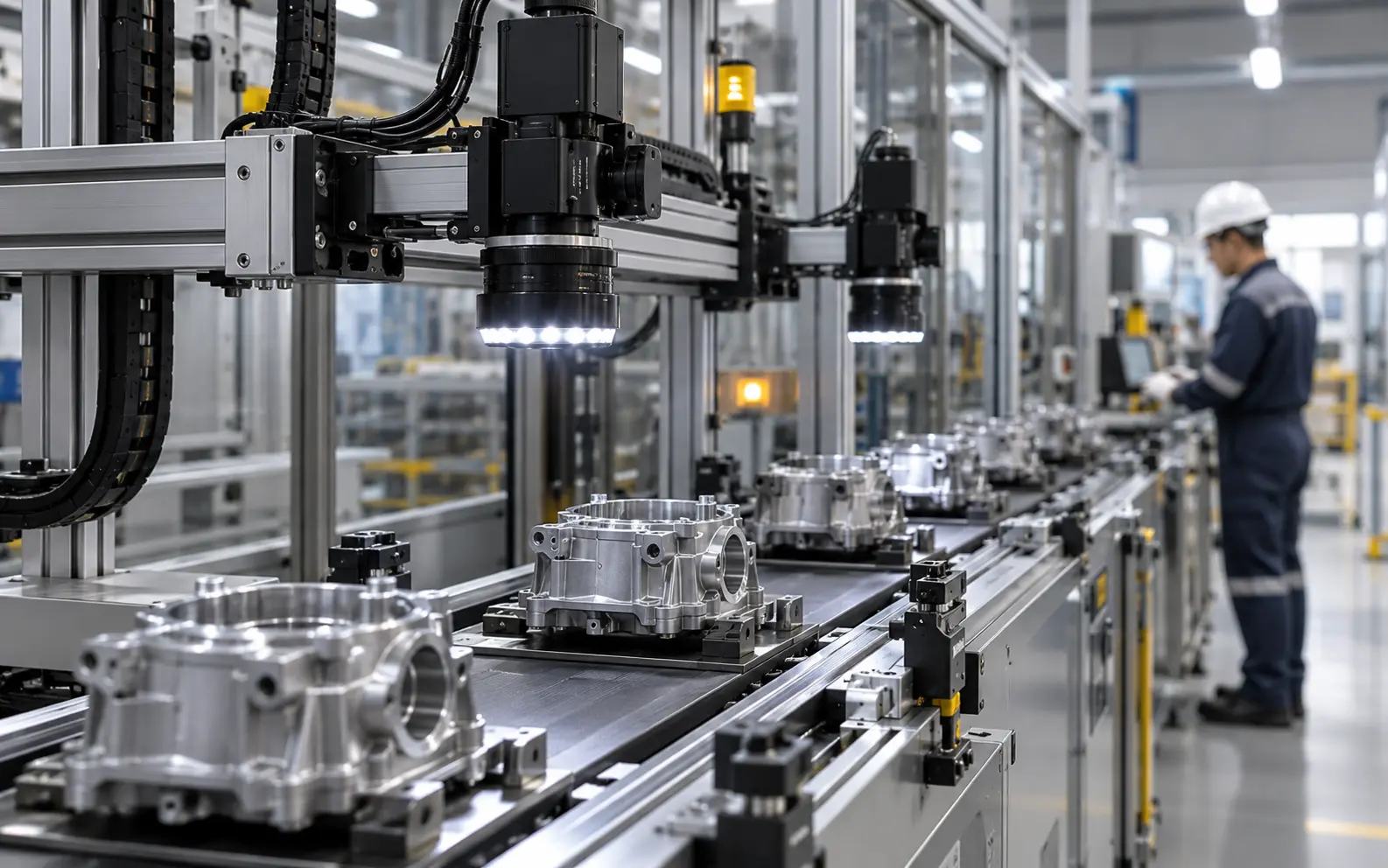
An edge vision presence that detects, classifies and records defects while remaining connected to line context, quality rules and human review.
See how it works08 / 09
01
The operational shift
Operator variation
Consistent criteria
Defect count
Root-cause signals
Presence in the workflow
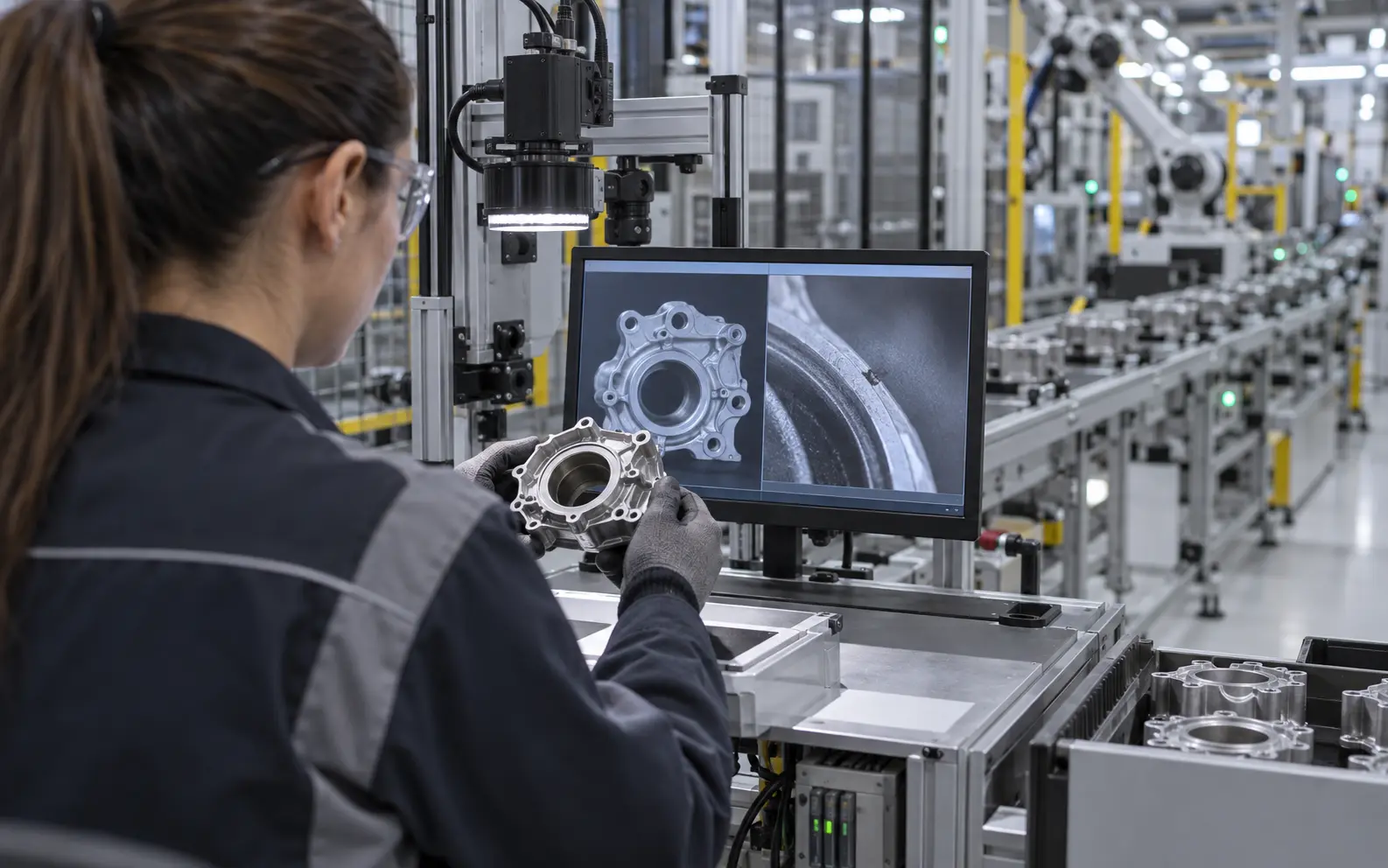
AI makes the first judgement. Quality owns the decision.
Compliance / Quality Verification Presence02
What this presence does
Presence and assembly
Checks parts, orientation, sequence and completeness against the active product configuration.
Surface inspection
Detects and localises scratches, cracks, deformation, contamination and finish anomalies.
Label and packaging
Verifies label presence, readable codes, placement and packaging configuration.
Variant control
Loads the correct inspection recipe from SKU, line or production order context.
Human review
Routes uncertain or novel conditions to quality staff with the relevant visual evidence.
Quality intelligence
Connects defect patterns to line, station, shift, supplier and model version.
Run only the inspection recipe approved for the active production order, and only after it has passed its golden set. Reject on the defect classes the quality plan defines and nothing else. Send anything outside those classes to quality staff with the frame, station and timestamp. Hold the line only on triggers written into plant policy; otherwise alert and keep the gate open. Record every verdict with the model and recipe version that produced it. Learn from exceptions only after a quality engineer has signed the review.
From the presence brief
03
How Ananta achieves it
One intelligence loop.
Built around the work.
- 01
Configure
Define the product, station, defect classes and acceptance rules.
- 02
Capture
Synchronise camera, lighting, trigger and production context.
- 03
Judge
Detect known defects and surface unknown anomalies at the edge.
- 04
Control
Alert, reject, stop or request human review according to policy.
- 05
Learn
Use reviewed exceptions to improve the model and inspection recipe.
04
Deployment architecture
Ananta Presence Runtime
Connect the physical environment to enterprise action.
Line layer
Industrial cameras · Lighting · Triggers · Edge GPU · PLC
Enterprise inputs
MES · ERP · SKU master · Quality plan · Supplier data
Actions
Pass/fail · Reject gate · Alert · Line hold · Quality case
Intelligence
Detection · Segmentation · Anomaly model · Recipe engine · Drift watch
05
Prove the value
Measure what changes.
- First-pass yield
- Defect escape rate
- False reject rate
- Scrap and rework
- Inspection cycle time
06
Enterprise controls
Governed from the start.
- Edge-first decisioningIncluded
- Recipe approval workflowIncluded
- Golden-set validationIncluded
- Model and verdict traceabilityIncluded
07
Boundaries by design
- Never adjusts an acceptance threshold on its own; changes ship as an approved recipe revision.
- Does not identify or track operators; the camera frames the part, not the person.
- Only holds a line on triggers the plant wrote into policy; a person clears the hold.
- Does not decide scrap versus rework; it rejects to the bin and opens a quality case.
08
Before you buy
Deployment questions.
What hardware goes on the line?
Industrial cameras and lighting at each inspected station, a trigger tied to the conveyor or PLC, and an edge GPU box in the cabinet. It talks to the PLC over the plant's existing protocol; no cloud link is needed to make a verdict.
Who approves a reject or a line hold?
The plant does, in advance: the quality plan names which defect classes trigger a reject and which trigger a hold, and the presence applies those rules without adding its own. A named quality engineer approves each recipe revision before it runs.
Where do images and verdicts live, and for how long?
Verdicts and model versions stay on the edge box and sync to your MES or quality system. It keeps full frames only for fails and reviews, on plant storage, for as long as your quality plan says, and discards pass frames after the verdict.
How does a quality engineer take over?
Switch any station to manual judgement from the HMI; the presence keeps capturing and logging but issues no verdicts. Uncertain or novel parts land in a review queue with the frame, station and recipe version, and only a person clears a hold.
What does a 90-day pilot cover?
One line, up to three stations, one product family. Weeks one to four build the recipe and golden set from your defect library, five to eight run in shadow beside current inspection, nine to twelve run live on the reject gate.
How are outcomes counted?
Per station, against the baseline you measured before the pilot. The pilot report shows first-pass yield, defect escapes found downstream or by the customer, false rejects confirmed by review, and scrap and rework cost, shadow weeks and live weeks side by side.
Manufacturing