Barcode event
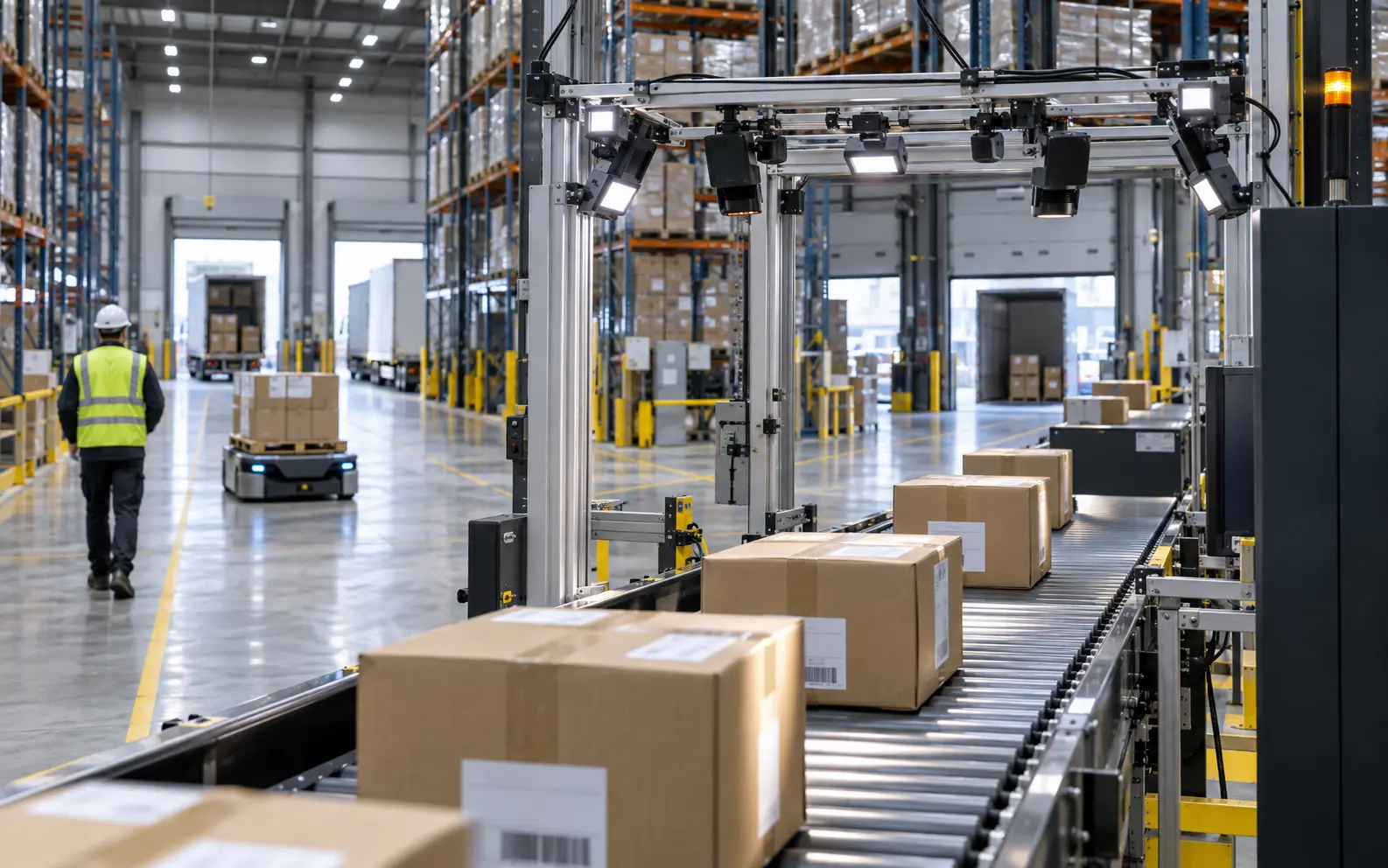
Compliance / Dispatch Assurance Presence
Create visual proof that the right goods moved the right way.
A vision presence across inbound, handling and dispatch that verifies events, connects them to warehouse records and resolves exceptions with evidence.
See how it works09 / 09
01
The operational shift
Camera archive
Searchable evidence
Manual audit
Continuous assurance
Presence in the workflow
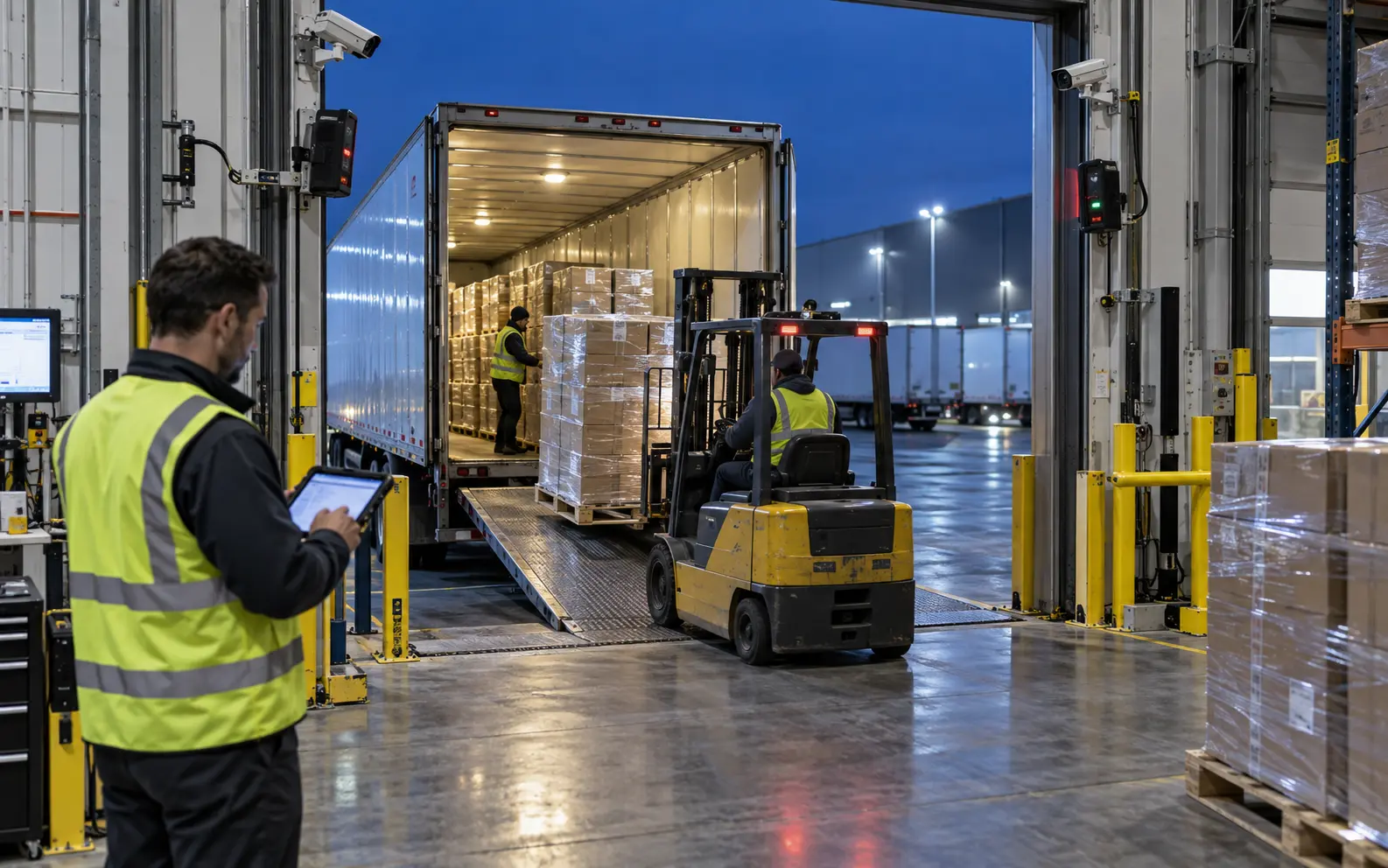
Dispatch events become visual, searchable proof.
Compliance / Dispatch Assurance Presence02
What this presence does
Inbound condition
Records load, seal, package condition and count exceptions at receipt.
Handling verification
Detects drops, unsafe movement, zone violations and process deviations.
Order completeness
Associates visible packages and labels with the active order or pallet context.
Loading evidence
Creates a searchable visual record of what entered each vehicle and when.
Exception response
Alerts supervisors with the relevant clip, order and location instead of an unstructured camera feed.
Flow intelligence
Measures dwell, congestion and repeated handling friction by zone and shift.
Record every carton, pallet and seal at receipt, on the conveyor and at the vehicle door, and bind each clip to the WMS order, pallet ID and dock. Compare what the cameras saw with what the scanner recorded before any vehicle leaves the bay. On a count or condition mismatch, hold the pallet, send the dock supervisor the clip and the order, and wait. Never release a hold on your own authority. Keep footage for the retention window the site sets, then delete it.
From the presence brief
03
How Ananta achieves it
One intelligence loop.
Built around the work.
- 01
Sense
Capture triggered events across docks, conveyors, aisles and loading bays.
- 02
Associate
Bind visual evidence to order, pallet, vehicle, worker or zone context.
- 03
Verify
Apply count, condition, handling and dispatch rules.
- 04
Resolve
Notify the correct owner and preserve the exception evidence.
- 05
Optimise
Use event patterns to improve process and workforce flow.
04
Deployment architecture
Ananta Presence Runtime
Connect the physical environment to enterprise action.
Site layer
Fixed cameras · Conveyor vision · Barcode/RFID · Edge GPU · Door sensors
Enterprise inputs
WMS · TMS · Order master · Yard management · Access control
Actions
Hold · Alert · Recount · Supervisor review · Evidence package
Intelligence
Object tracking · Event association · Rule engine · Searchable timeline
05
Prove the value
Measure what changes.
- Dispatch accuracy
- Claims resolution time
- Damage events
- Dock dwell time
- Manual review hours
06
Enterprise controls
Governed from the start.
- Purpose-limited videoIncluded
- Configurable retentionIncluded
- Role-based evidence accessIncluded
- Human review for consequential actionIncluded
07
Boundaries by design
- Never identifies a worker by face; evidence names a zone and shift, not a person.
- Never releases a held pallet or vehicle; a dock supervisor clears every hold.
- Does not settle damage claims; it assembles the evidence and the claims team decides.
- Only writes exception events and holds to the WMS; it never edits stock quantities.
08
Before you buy
Deployment questions.
What hardware goes on the dock floor?
Fixed cameras over receiving doors, conveyor exits and loading bays, plus an edge GPU appliance in the comms room. It reads your existing barcode and RFID scans and door sensors; no new scanners or worker devices.
Who approves a hold or a recount?
The presence raises the hold and names the pallet, order and dock. A dock supervisor with the right role clears or escalates it in the WMS; nothing leaves the bay on the presence's decision alone.
Where is footage stored, and for how long?
Clips stay on the edge appliance at your site, or in your own cloud tenant. Exception clips stay for the claims window you set; routine footage rolls off after 30 days unless you change the default.
How does a supervisor take over an exception?
Every alert lands in the supervisor's queue with the clip, order number and dock already attached. They can walk to the bay, recount, override with a reason, or send the evidence package to the claims team; the presence logs each step.
What does a 90-day pilot cover?
Two to four dock doors and one conveyor exit at a single site, wired to your WMS order feed. The first 30 days baseline and tune; the remaining 60 run live holds against your current dispute and damage numbers.
How do you count outcomes?
Against your own numbers, not ours: dispatch accuracy from WMS reconciliation, claims resolution time from the claims log, damage events per thousand pallets, and manual review hours from supervisor timesheets. You see the same dashboard we do.
Warehousing