Counters and portals

Frontline / Citizen Service Presence
One trusted front door for every citizen journey.
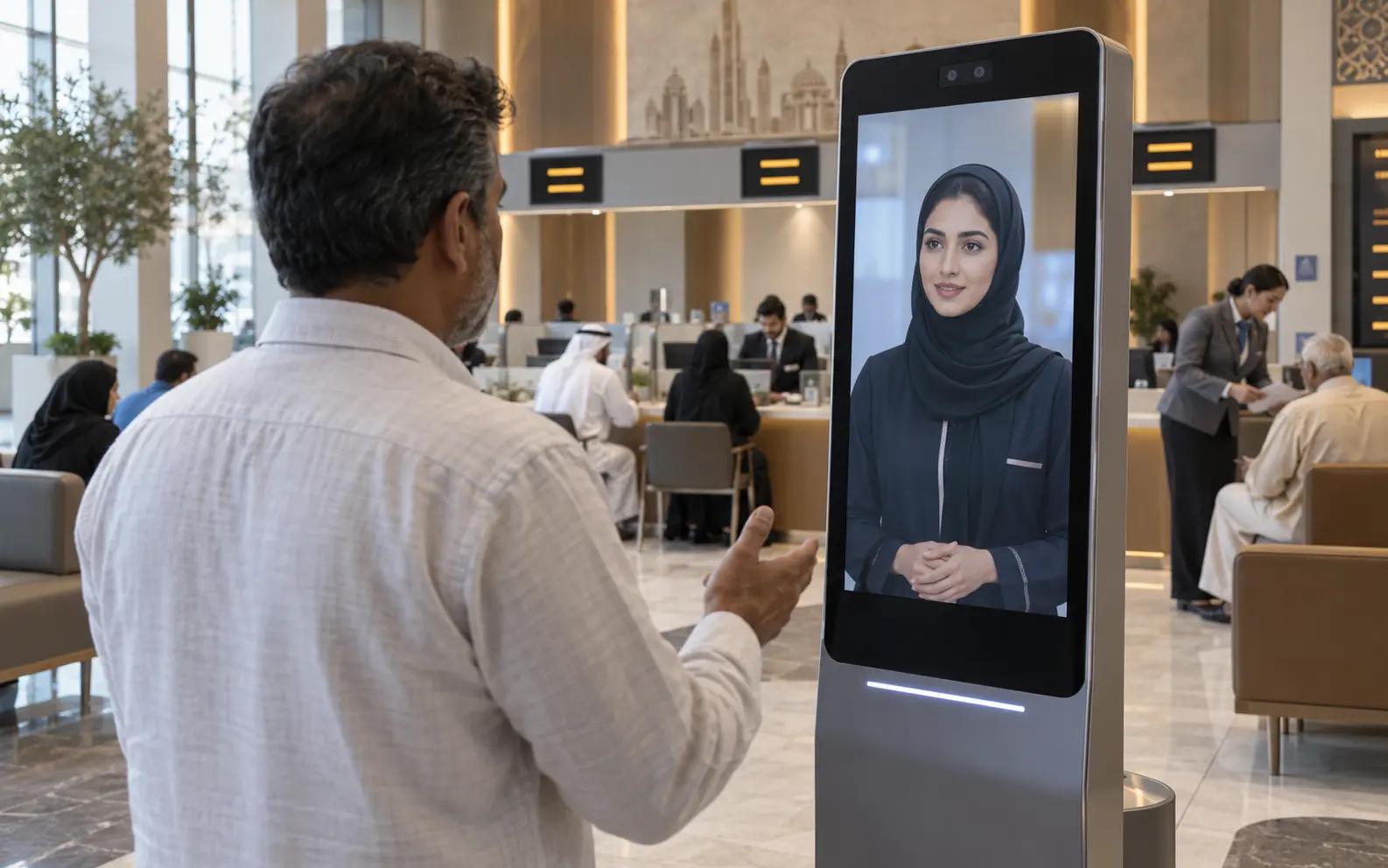
A multilingual AI presence that explains services, completes guided workflows and keeps the citizen informed across kiosk, web, voice and WhatsApp.
See how it works01 / 09
01
The operational shift
Information only
End-to-end assistance
Lost follow-ups
Journey continuity
Presence in the workflow
The conversation becomes the service layer.
Frontline / Citizen Service Presence02
What this presence does
Service discovery
Understands intent and identifies the right scheme, permit, payment or department.
Guided applications
Explains eligibility, gathers information and assists through multi-step forms.
Multilingual presence
Speaks and listens in the citizen's preferred language across physical and digital channels.
Case continuity
Remembers consented context, status and pending actions when the citizen returns.
Human handoff
Routes exceptions with a concise case brief instead of asking citizens to start again.
Service intelligence
Shows demand, abandonment, recurring confusion and unresolved journey stages.
Answer only from the published service catalogue and the policy versions the department has approved. State eligibility as the rule reads and cite the regulation it comes from. Fill forms, book appointments and raise grievances only through the authorised case system. Before taking any fee, show the amount, the receiving department and the receipt reference. When a decision needs an officer, or the citizen asks for one, hand over with the case brief and the documents already gathered. Log every step against the case number.
From the presence brief
03
How Ananta achieves it
One intelligence loop.
Built around the work.
- 01
Recognise
Detect language, intent, channel and accessibility needs.
- 02
Guide
Ground every answer in approved policies and service knowledge.
- 03
Complete
Call authorised systems for forms, bookings, payments and grievances.
- 04
Continue
Carry the journey across kiosk, mobile, WhatsApp and human service desks.
- 05
Improve
Learn from completion, escalation and citizen feedback signals.
04
Deployment architecture
Ananta Presence Runtime
Connect the physical environment to enterprise action.
Presence surfaces
Kiosk · Holobox · Web · Mobile · Voice · WhatsApp
Enterprise inputs
Service catalogue · Policy RAG · Identity · Queue and case systems
Actions
Form assist · Appointment · Payment · Grievance · Status update
Intelligence
Intent routing · Journey memory · Behaviour analytics · Handoff
05
Prove the value
Measure what changes.
- Journey completion
- Counter deflection
- First-contact resolution
- Average service time
- Citizen satisfaction
06
Enterprise controls
Governed from the start.
- Approved-answer groundingIncluded
- Consent and identity boundariesIncluded
- Role-based system accessIncluded
- Complete interaction auditIncluded
07
Boundaries by design
- Never approves, rejects or predicts the outcome of an application. An officer decides.
- Does not store identity numbers, uploaded documents or payment details outside the department's case system.
- Only verifies identity through the department's own ID service, never by recognising a face.
- Never invents a fee, deadline or eligibility rule that is not in the approved catalogue.
08
Before you buy
Deployment questions.
What hardware goes into a service centre?
A kiosk or holobox with a touch screen, microphone and a camera used only to sense that someone is present, plus a token printer if the queue system uses one. Web, voice and WhatsApp run on the department's existing channels.
Who approves an action before it runs?
The department, per action type, before go-live. Form assist, appointment booking and status lookups run unattended; fee collection and grievance filing run only where the department has enabled them, through its own APIs, after the citizen confirms on screen.
Where is citizen data stored, and for how long?
Case data stays in the department's own case and identity systems. The presence holds only the transcript and consented journey memory, in the department's tenancy and region, for the period its records schedule sets; the default is 90 days.
How does an officer take over a case?
The officer receives the case brief, the citizen's language, the documents gathered and the step reached, at the counter or on their desk, and continues from that step. The citizen repeats nothing, and the transcript records the handover.
What does a 90-day pilot cover?
One service centre and two or three high-volume services, such as a certificate application, a fee payment and a status query, in two languages. The first month wires the catalogue and case system; the remaining weeks run live with officers in the loop.
How are outcomes counted?
Each journey is logged against a case number as completed, handed to an officer or abandoned, and at which step. Counter deflection, first-contact resolution and service time are compared with the queue system's own baseline from the weeks before the pilot.
Public Services