Manual rounds
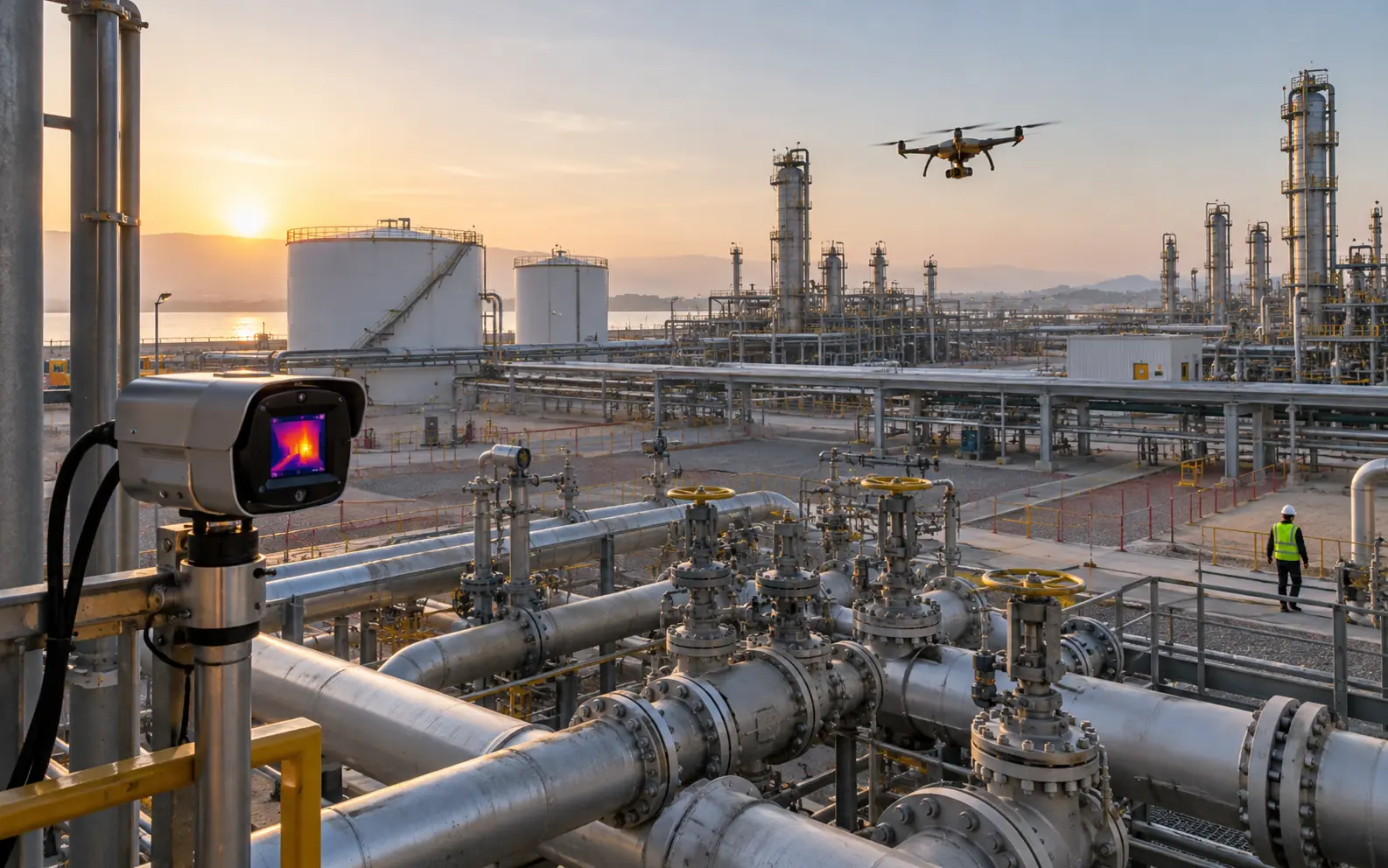
Operations / Critical Asset Inspection Presence
Continuous intelligence across assets people cannot inspect continuously.
An autonomous physical presence that combines aerial, thermal and fixed sensing to surface leaks, equipment anomalies and site risks before escalation.
See how it works05 / 09
01
The operational shift
Hazardous access
Remote observation
Isolated findings
Asset history
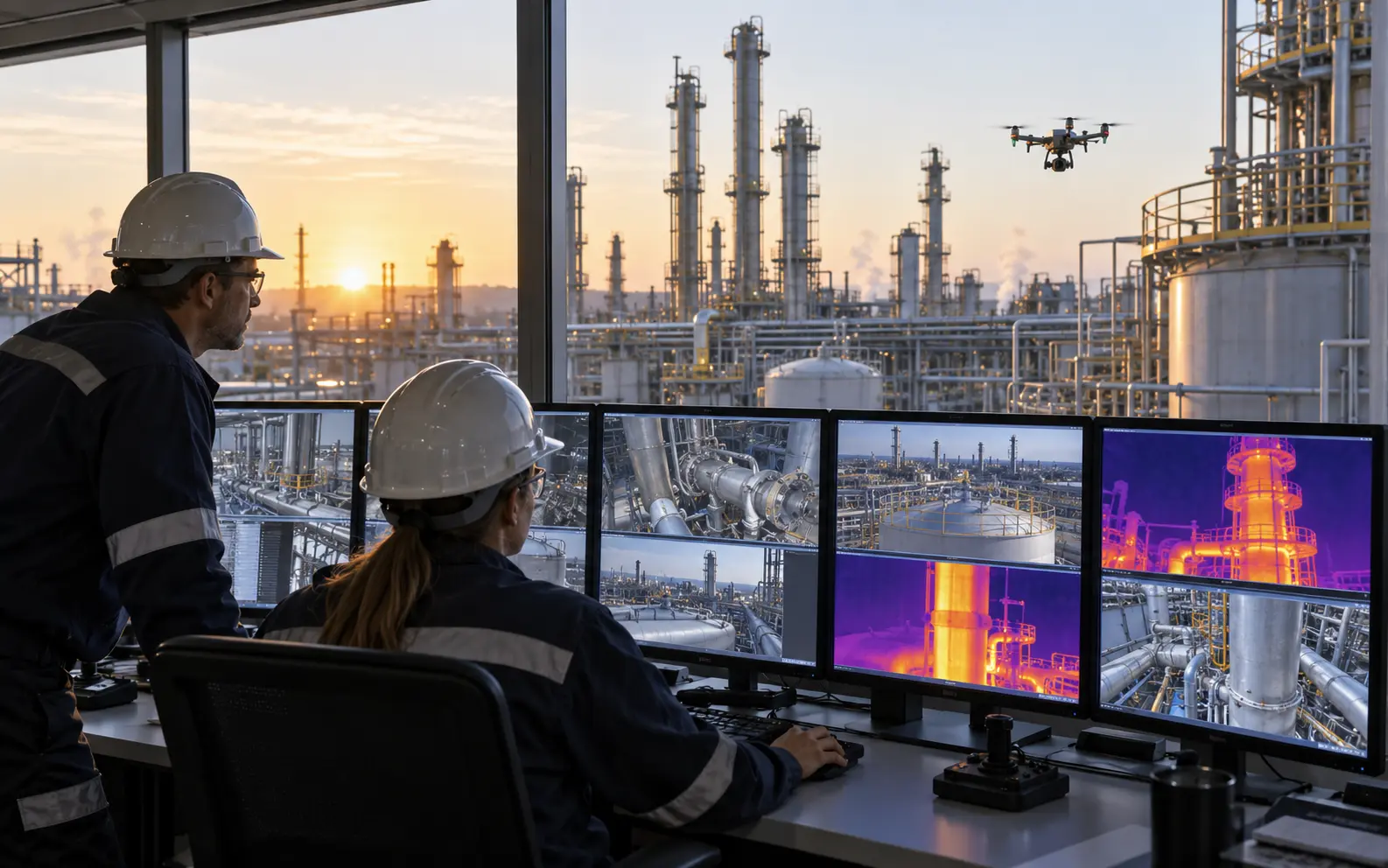
Presence in the workflow
The control room gains eyes at every asset.
Operations / Critical Asset Inspection Presence02
What this presence does
Thermal equipment watch
Detects abnormal heating across pumps, motors, tanks and electrical infrastructure.
Leak intelligence
Combines permitted gas-sensing or OGI payloads with location and equipment context.
Tank and structure inspection
Observes corrosion, ponding, coating damage and structural change without risky access.
Pipeline corridor watch
Finds encroachment, excavation and physical change along rights of way.
Incident visibility
Provides rapid visual and thermal context to authorised response teams.
Compliance evidence
Packages time, location, asset, model and operator decisions into an auditable record.
Fly only the routes, altitudes and payloads approved for this site. Hold at dock while a hazard-zone procedure is active or the flight envelope is withdrawn. Read thermal, OGI and fixed-sensor signals against the asset registry and live SCADA state before raising anything. Raise a leak or hotspot finding as a correlated alert with location, asset tag and evidence attached. Never isolate, vent or shut in equipment; hand every intervention to the control room with the record prepared. Log every mission, frame and decision for maintenance and regulatory review.
From the presence brief
03
How Ananta achieves it
One intelligence loop.
Built around the work.
- 01
Schedule
Define approved routes, assets, payloads and operating boundaries.
- 02
Observe
Capture thermal, visual, gas and telemetry signals.
- 03
Correlate
Combine inspection data with alarms, SCADA and asset history.
- 04
Respond
Alert, dispatch, create a work order or request human confirmation.
- 05
Prove
Retain traceable evidence for maintenance and regulatory review.
04
Deployment architecture
Ananta Presence Runtime
Connect the physical environment to enterprise action.
Field layer
Drone · Dock · Thermal/zoom/OGI payload · Fixed sensors · Edge compute
Enterprise inputs
SCADA · CMMS · GIS · Alarm management · Asset registry
Actions
Autonomous mission · Incident alert · Work order · Compliance record
Intelligence
Anomaly recognition · Change detection · Sensor correlation · Risk scoring
05
Prove the value
Measure what changes.
- Inspection frequency
- Exposure hours avoided
- Alarm verification time
- Leaks found earlier
- Unplanned downtime
06
Enterprise controls
Governed from the start.
- Approved flight envelopesIncluded
- Hazard-zone proceduresIncluded
- Data residency optionsIncluded
- Role-based incident accessIncluded
07
Boundaries by design
- Never isolates, vents, shuts in or restarts equipment; every intervention goes to the control room.
- Does not hold control-system credentials; SCADA tags arrive through a one-way feed.
- Does not declare a reportable release; a certified engineer confirms before any regulator notice.
- Never identifies workers; a person in a hazard zone is a count, not a name.
08
Before you buy
Deployment questions.
What hardware goes on site?
A docked drone with thermal, zoom and, where permitted, OGI payloads, plus fixed thermal or gas sensors at high-risk assets. Fixed units in classified areas are specified to the site's Ex requirements; edge compute sits in the dock.
Who approves a mission or an alert action?
Your site sets the flight envelopes, payloads and schedule; the presence flies only what is signed off. Alerts go to the control room, and any dispatch, work order or shutdown is a named operator's decision.
Where is inspection data stored, and for how long?
Frames and telemetry are processed at the edge and retained in your region, on-premise or in your tenant. Findings and evidence follow your asset-integrity retention schedule; raw footage defaults to 90 days unless tied to a finding.
How does a human take over mid-mission?
The dock operator or control room can pause, hold or return the drone at any point, and a site alarm grounds it automatically. Every alert opens the live feed and the asset's history for whoever takes it.
What does a 90-day pilot cover?
One site, a fixed set of assets such as a tank farm, a pump row and a pipeline corridor, and one dock. It runs alongside your existing rounds so findings can be checked against what inspectors already report.
How are outcomes counted?
Against a baseline taken before the pilot: inspections per asset per month, exposure hours removed from hazardous areas, time to verify an alarm, and leaks or hotspots found before an operator round would have. The counts live in your CMMS, not ours.
Oil & Gas